Red Flags When Purchasing Research Peptides

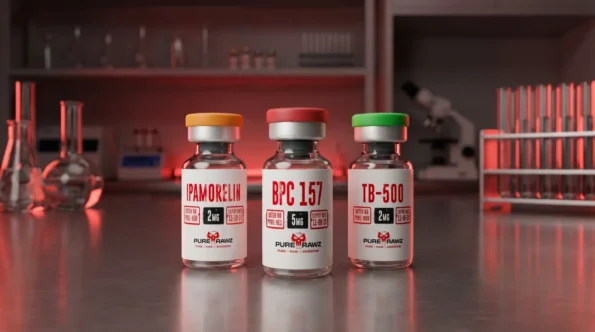
A product listing can look complete and trustworthy at first glance. Researchers may find clean specifications, reasonable pricing, and professional presentation. However, closer inspection often reveals problems with quality and documentation. By then, they may already be affecting an ongoing study. Differences in quality and documentation among research peptide suppliers are not always immediately apparent. Some suppliers […]

CONTINUE READING ➞

GHRP-2 vs GHRP-6: Key Differences in Mechanism, Research, and Effects

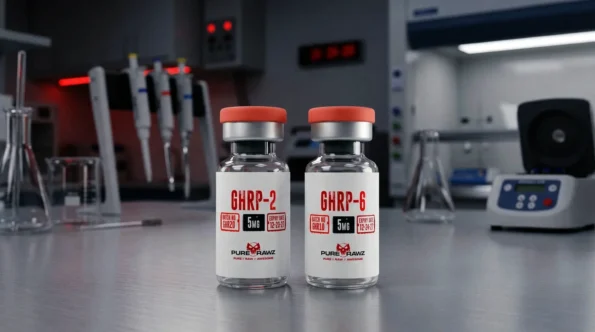
GHRP-2 and GHRP-6 are two synthetic peptides used in modern research settings. Both are growth hormone secretagogue peptides. Researchers believe that both compounds act as synthetic agonists of the ghrelin receptor (GHS-R1a). The compounds may trigger downstream growth hormone release from the pituitary as observed in investigational models. Moreover, researchers have suggested that both GHRP-2 […]

CONTINUE READING ➞

Best Research Peptides for Laboratory Use

Researchers also use research peptides for signal transduction and cellular mechanism studies in preclinical research models.  Best peptides refer to analytical quality and reproducibility, not only the outcomes. Unlike peptide drugs that go through rigorous regulatory approvals, research peptides are labelled and intended for Research Use Only (RUO). In the following blog, we’ll talk about the best […]

CONTINUE READING ➞

How Long Do Peptides Last?

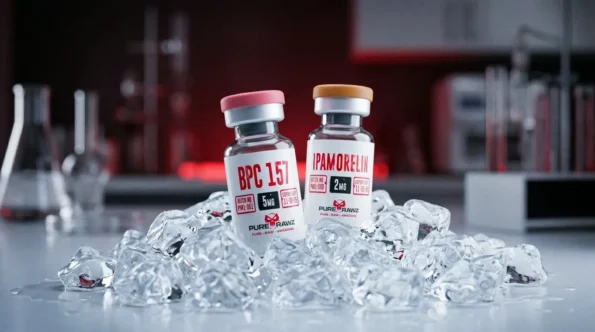
Several peptides have different lifespans according to their manufacturing. However, generally it is considered that peptides stability varies widely depending on sequence, formulation, and storage conditions. Let’s break it down and explore what really determines how long peptides stay effective. How Long Do Peptides Last? Below is a table designed to give you a general idea of […]

CONTINUE READING ➞

Tesamorelin vs AOD 9604: Mechanisms, Research, and Key Differences

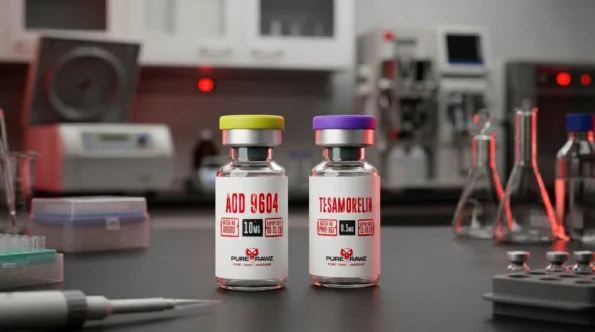
In different preclinical models, Tesamorelin and AOD 9604 have been explored for their possible roles in lipid metabolism. Researchers have observed that Tesamorelin signals the pituitary gland to release growth hormone by binding to the GHRH receptor [1]. AOD 9604, by contrast, is studied for direct effects at the adipocyte level in research preclinical models […]

CONTINUE READING ➞
Close My Cart
Close Wishlist
Recently Viewed Close
Close

Close
Navigation
Categories
Newsletter

Newsletter

Be the first to know about our new arrivals, exclusive offers and the latest Compounds update.